
How appointments, primary elections, and a 2026 ballot question could shape the future of Lee County government
By Katrina Salokar
East Lee News | The ROAR
The appointment of Trish Petrosky to the Lee County Commission’s District 5 seat has renewed discussion about how local offices are filled and how election rules shape representation in Lee County.
Under Florida law, the Governor appoints a replacement when a county commission seat becomes vacant before the end of a term. That process was used following the death of Commissioner Mike Greenwell in October 2025.
While the appointment followed state law, the circumstances surrounding the vacancy and Lee County’s election structure have prompted broader public conversation about appointments, election rules, and how candidates ultimately reach office.
Those questions extend beyond a single seat. They also touch on how commissioners are elected, how primary elections determine candidates, and a ballot measure that could change the county’s election system.
Two elections in 2026 will play a central role in those decisions.
The first occurs during the primary election on August 18, 2026. Florida operates under a closed primary system, meaning voters must be registered with the same political party as the candidates in order to participate in that party’s primary election.
If only Republican candidates qualify for the District 5 race, the Republican primary could determine the outcome of the seat before the general election. Voters who wish to participate in that primary must be registered as Republicans by the voter registration or party-change deadline of July 20, 2026.
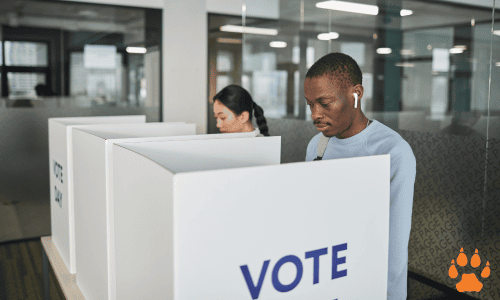
The second decision will come during the November 3, 2026 General Election, when Lee County voters will consider a ballot measure asking whether the county should transition from at-large commission elections to single-member districts beginning in 2028.
Lee County is one of only two Florida counties with populations above 500,000 that still elect commissioners at large.
Supporters of single-member districts argue that the change would allow each district to elect its own representative and strengthen local accountability. Opponents say countywide elections encourage commissioners to consider the needs of the entire county.
The decision will ultimately be made by voters.
District Votes and Countywide Outcomes
Recent election results have highlighted how Lee County’s at-large system works in practice.
In the most recent District 5 race, Amanda Cochran received roughly 65 percent of the vote within District 5 itself and led countywide totals on Election Day.
However, because commissioners are elected at large, voters from across the entire county participate in each district race. After absentee and vote-by-mail ballots were counted, the final outcome reflected the countywide totals rather than the vote within the district alone.
For some residents, the result illustrates how district-level preferences can differ from countywide outcomes under the current election system.
When Appointments Become Incumbency
Appointments are not uncommon in Lee County government.
Commissioner Mike Greenwell himself first entered the commission through a 2022 appointment following the death of Commissioner Frank Mann and later won election to the seat in 2024.
Similarly, Lee County Sheriff Carmine Marceno was appointed in 2018 by then-Governor Rick Scott after Sheriff Mike Scott stepped down. Marceno later ran for election and won the position in 2020.
Supporters of the appointment process say it ensures continuity in government operations. Critics note that appointed officials may later run for office as incumbents, benefiting from the visibility and experience that come with holding the position.
Both perspectives recognize that the appointment process itself is authorized under Florida law.
Campaign Infrastructure and Political Consulting
Campaign finance and lobbying records show that several individuals involved in Lee County political campaigns and development issues have worked with the same consulting firm.
TM Strategic Consulting, led by political consultant Terry Miller, has represented Neal Communities on lobbying matters related to utilities and development policy in Lee County.
Public records also show that State Representative Tiffany Esposito has retained the firm for political consulting services, and campaign finance filings indicate that several county commission campaigns have used the firm during recent election cycles.
Miller also authored the biography used to introduce Commissioner Petrosky following her appointment and has spoken publicly about her priorities.
Observers note that shared political consultants and campaign infrastructure are common in Florida politics. Others say overlapping relationships between development interests, campaigns, and consultants can influence how local policy discussions unfold.
Budget Decisions and Public Safety
Another key responsibility of the county commission is approving the annual county budget.
Public records show that the Lee County Sheriff’s Office receives one of the largest allocations in the county budget each year. Commissioners review and approve those budgets annually.
Support for law enforcement remains a widely shared position among local officials.
At the same time, traffic safety advocates have pointed to ongoing concerns about roadway fatalities and serious crashes across Southwest Florida. Population growth, tourism, road design, and enforcement strategies are frequently cited as factors influencing those trends.
These discussions illustrate how budget decisions, public safety priorities, and policy debates intersect at the county commission level.
The Decision Facing Voters
The broader structural question will appear directly on the ballot during the November 3, 2026 General Election.
A measure authorized by House Bill 4001 (HB 4001) will ask voters whether Lee County should change from at-large commission elections to single-member districts beginning in 2028.
Supporters say the change would give each district greater control over its representation and improve accountability at the local level.
Opponents say countywide elections help ensure commissioners consider the interests of the entire county.
Ultimately, the decision will be made by Lee County voters.
Key Election Dates for Lee County
Voter Registration / Party Change Deadline: July 20, 2026
Primary Election: August 18, 2026
General Election: November 3, 2026
Because Florida uses closed party primaries, voters must be registered with the same political party as the candidates to participate in that party’s primary election.
Editor’s Note
This article reviews publicly documented appointments, election rules, and campaign relationships in Lee County. It does not allege wrongdoing by any individual. East Lee News welcomes factual corrections, documentation, or responses from readers and public officials.